Abrahangs: why so divisive, and do they actually work?
You may have seen on social media that some well known coaches and physios have been debating the claims made for the Abrahangs protocol. This scepticism is understandable. Ever since Emil's original video went viral, many climbers have contemplated adding this to their training. The famous podcaster Tim Ferriss even interviewed Keith Baar about his research in the area.
But should you be doing Abrahangs in your training and are the claims actually substantiated?
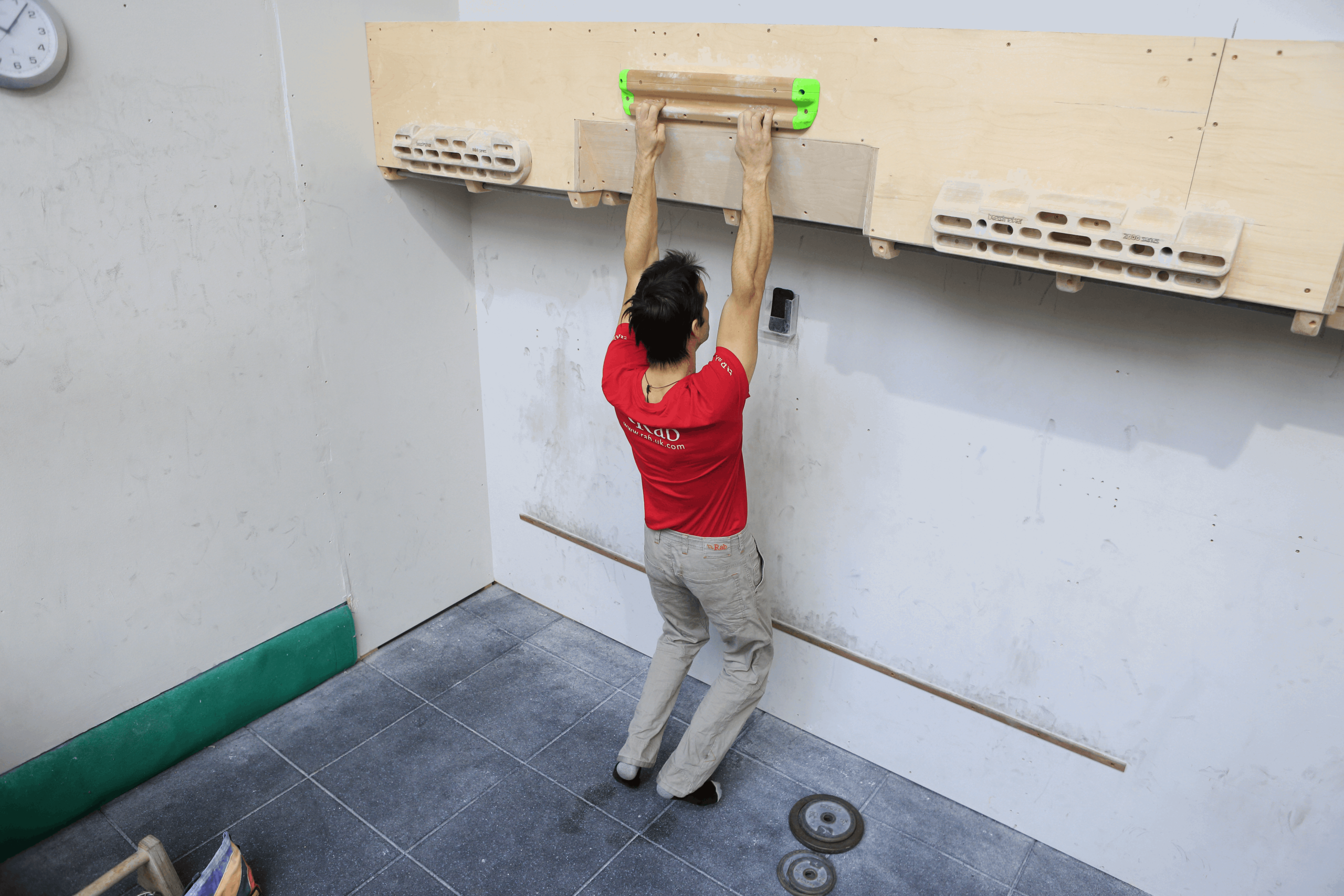
In short, Abrahangs (not named by Emil) is a high-frequency, low-intensity hangboard session. Here’s the original protocol Emil used.
10 hangs using different grip positions over 10 minutes. Every hang is 10 seconds on, 50 seconds rest Completed twice a day, every day. Feet stay on the floor throughout; if you find yourself hanging, you're pulling too hard.
My instinctive reaction when I first saw this was:
1. Emil is just re-recruiting from a weaker starting position, having already been strong in the past, and
2. Oh shit, every client is going to ask me to add this to their plan next week.
I quickly watched the videos, read whatever papers existed on the subject and tried the protocol alongside the other coaches at Lattice. None of us wanted to add it to a client's week without knowing what it did or how it felt first hand.
Five years on, I've used it in one form or another with most of my athletes, myself included. I've also been privy to much of the ongoing research in this area, and last week I spoke to Keith Baar and Natalie Gilmore, the lead researchers on the latest developments.
So, let's get to the point: I am a fan, but there is some important context I think climbers need before you start using it.
The first research paper on the topic using an extremely large real-world Crimpd dataset has holes for sure. Abrahangs on their own didn't reach statistical significance, and total climbing volume wasn't tracked. But it still produced enough to suggest that further research and real-world testing in my coaching work were worthwhile. The study compared four groups of climbers, tested before and after a training block: Climbing only (no specific finger training), Abrahangs only, Max hangs only, or both types of hangs.
Headline results, as change in strength-to-weight ratio:
-Climbing only: no change
- Abrahangs only: ~2.5% (a positive trend, not statistically significant)
-Max hangs only: ~3.2% (significant)
-Both: ~5.8% (significant, and greater than either alone)
Frequency is the interesting factor. Groups were defined by training density: at least three Abrahangs sessions a week, and at least one max hangs session a fortnight. The "both" group's gain was roughly the sum of the two, which could suggest they're doing different jobs.
Since publication, Natalie and Keith have secured funding to follow this up, first looking at changes in rat tendons and then back to humans, with lab work and large-group research on climbers. The results so far have been extremely supportive of the adaptations from both Abrahangs and Density hangs, another protocol being looked at.
Abrahangs show a significant change in tendon torque (tensile strength) and surprisingly produced better results compared to max hangs, even once frequency and time under tension are accounted for. Another finding further supported the use of higher weekly frequency training (5-14 days per week) at lower loads to improve tendon torque. This backs up Emil’s original hypothesis.
Let me be clear, these findings are at a very early stage, and we will share the opportunity to take part in the upcoming climbers' study soon. It will involve in-person tendon scanning, randomised groups and close monitoring, which should make the results extremely useful for us as climbers. All of the work this team has put into the new testing protocols addresses the limitations of the first study which were clearly highlighted in the first paper.
What I've been prescribing with athletes
From this research and my own coaching, Abrahangs have convinced me that higher weekly frequency is useful for climbers' fingers. I find the case convincing that high-frequency, low-intensity loading helps train the tendons, and that combined with heavier loading, which activates more of the muscle belly, you get good finger strength results.
Practically, that means I often add Abrahangs on the days around harder sessions to get more stimulus into the fingers without adding more uncontrolled climbing or heavier hangs. What I don't do is stack daily or twice-daily protocols on top of existing training. The daily-loading research (so far) on Abrahangs is done without controlling for climbing volume. Put that on top of hard climbing and, in my experience, the fingers start to complain.
One rule I do have: every athlete I work with gets at least one day a week with no tendon loading at all, even if the research says you could go daily. Why? Because climbing isn't a controlled-variable sport. All of us can overcook the odd session or load our fingers harder than planned, and one full rest day gives you a 24-hour-plus safety net.
Here are four cases for who could add Abrahangs to their week. Are you one of them?
1.Additional training for well-trained climbers
For athletes able to train more than four days a week, balancing the load on fingers and forearms is hard. Very few people can train on a board four days a week, let alone more, and the same goes for hard power endurance or high-intensity hangboarding. Here, Abrahangs give a great stimulus without adding the kind of load that would upset training or recovery.
I work with several athletes who train Tuesday, Wednesday and Thursday, then climb or train at the weekend as well. For lower-level climbers in that pattern, I'd add Abrahangs on the Wednesday and spend more of that session on endurance or conditioning, which lets them climb harder on the Thursday. If the athlete is elite or even world class, like Erin McNeice or the man himself Emil, I have added Abrahangs on Monday when they normally would rest to get further stimulus without upsetting recovery before the mid week training block.
User example dose: Adding abrahangs to all but 1 or 2 rest days can add useful stimulus without excessive load for well trained athletes.
2.Naturally strong climbers
Molly Thompson-Smith and I are lucky in that we recruit muscular strength quickly, but unlucky that this can make us susceptible to finger injuries. For athletes with this profile, Abrahangs are a great way to get muscular recruitment and tendon stiffness without risking high loads. It's always in combination with high-intensity training, but, as with the well-trained climbers above, I can take an injury-prone athlete from training three days a week to five or six without, in my experience, adding more risk to the fingers. Anecdotally, they seem to come out more robust, not less.
User example dose: 2–3 sessions a week, replacing what would otherwise be extra high-intensity finger specific work. Moving back to max hangs for peak performances.
3.Starting a training phase
Most climbers who start a plan feel motivated and psyched to see gains. Unfortunately, gains come slowly, and you NEED to ramp up to higher weekly loads to prepare your body. Abrahangs on most non-climbing days are a great way to get ready for the higher frequency and loads later in the plan without shocking the system. If you'd normally do specific off-the-wall finger strength work, I have recommended replacing those sessions with Abrahangs for the first week or two, then slowly switching a session or two back to max hangs, depending on whatever else you're doing that week, as you feel ready.
User example dose: 3–4 sessions a week for the first 2 weeks of a plan, then taper as max hangs or harder climbing picks up.
4.Deload (or travel) weeks
The goal of a deload week is to give body and mind a chance to recover and supercompensate (bounce back stronger) from the previous cycle. Most people don't need a whole week for this, but it's a useful period to work around and easy to fit into your life. A lot of climbers feel sluggish after a deload week because they haven't been moving or recruiting muscles in the same way. Abrahangs, for me, are a great solution: three or four sessions across the week is a nice way to feel proactive and keep the different grip positions feeling natural, while still reducing load enough to recover.
It also works well for people who travel a lot. I often give it to high-profile athletes like Alex Honnold during busy work periods, as well as before and after travelling, to make the adjustment back to higher training loads easier to manage.
User example dose: 3–4 sessions across the week, once a day, and nothing else on the fingers.
Who shouldn't use this protocol
If you've got an acute finger injury, I wouldn’t personally recommend this as a rehab protocol initially without speaking to a physio first. This is because there is little evidence to support its use for inflammatory conditions like tenosynovitis. For injury rehab, low load density hangs and abrahangs could be useful but an experienced climbing physio is always a good port of call before doing anything you are not sure about.
If you're a complete beginner with no hangboard base, focus on the basics of learning to use a fingerboarding safely and climbing movement to improve first. And if you're already doing high-volume fingerboarding or training (5-7 days a week), be careful with how you balance your training, adding abrahangs without replacing any workouts is more load, not free load.
And most importantly, if you have already committed to a training block, don't just switch lanes now or add this in without carefuly thought. The examples above are still part of a thoughtful approach to planning training. If you have planned your training correctly or working with a coach the weekly load should already be at the right level for you. Adding more stimulus without careful consideration is just not worth it. This means that its worth waiting for the next training block to review any decisions about adding a new type of training in.
In conclusion
The original research on this subject is excellent because it opened the door for coaches like me to experiment and for further research to happen. More is coming that will fill the holes from earlier work and help us properly understand the effects of different loading protocols for climbers. I'm a big fan of Abrahangs and use it with my clients, mainly to increase the frequency of stimulus to the fingers and forearms without excessive changes to weekly training load. I've seen really positive results across more than 50 clients over the past five years, so it's staying as one of the many tools in my coaching and training toolbox.
Thanks for reading,
Ollie Torr
Comments (0)
Be the first to leave a comment.