ARCing and CARCing. Can something so simple actually help you improve at climbing?
Last week I was a guest on the Careless Torque podcast. One subject Sam and Aidan wanted to ask me about was ARCing and the more controversial version of CARCing. Aidan has recently seen some of the athletes I work with performing well after using this protocol so they wanted to find out more.
We have just started making an updated version of this video on the subject using a group of participants so keep your eyes pealed for that on our youtube channel this Autumn. In the meantime, here's a refined version of what I said during the interview.
What ARCing and CARCing actually are
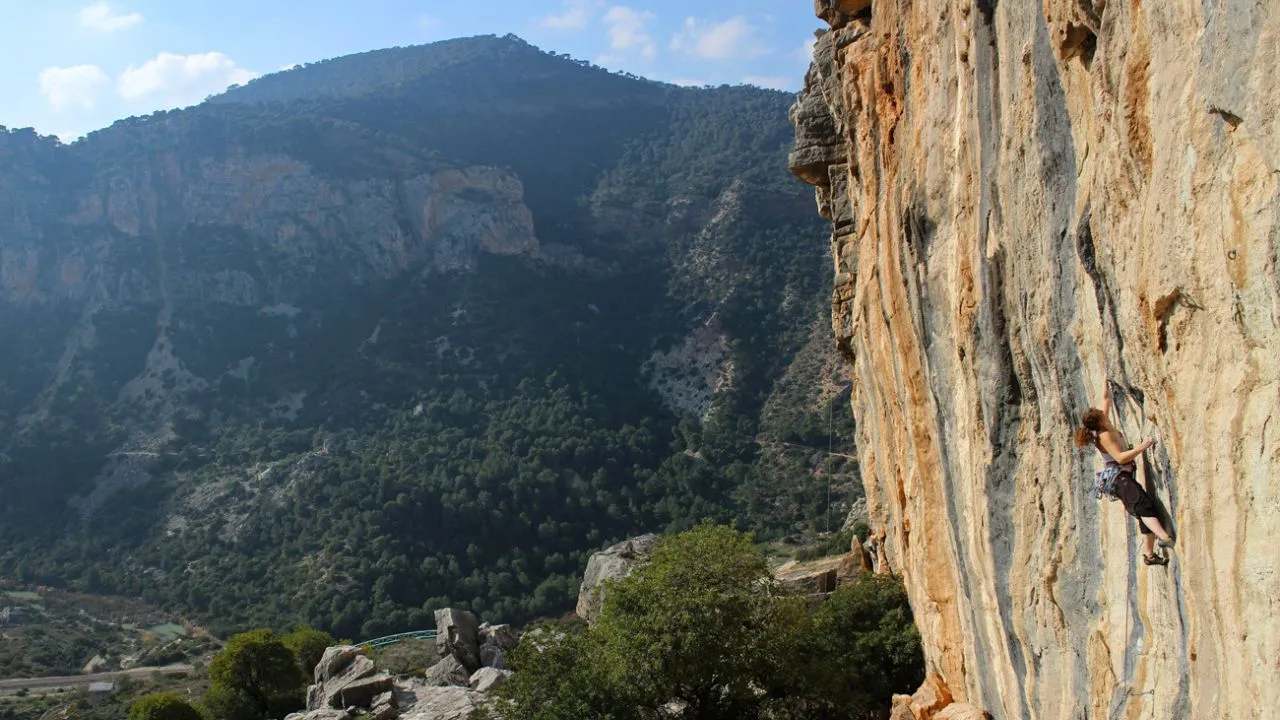
ARCing is pretty boring, but done properly it is extremely useful. The acronym is from the Anderson brothers' — Aerobic Restoration and Capillarity — and the method is simple: climb continuously at a low intensity for 5 to 60 minutes without stopping. The goal is not to become pumped but to just have a warm feeling in your forearms which signifies increased blood flow. You should finish an ARCing workout feeling like you could have kept going. The main reason for wanting to stop is lack of time, boredom or skin. That means better holds, moderate wall angles and slow relaxed movement.
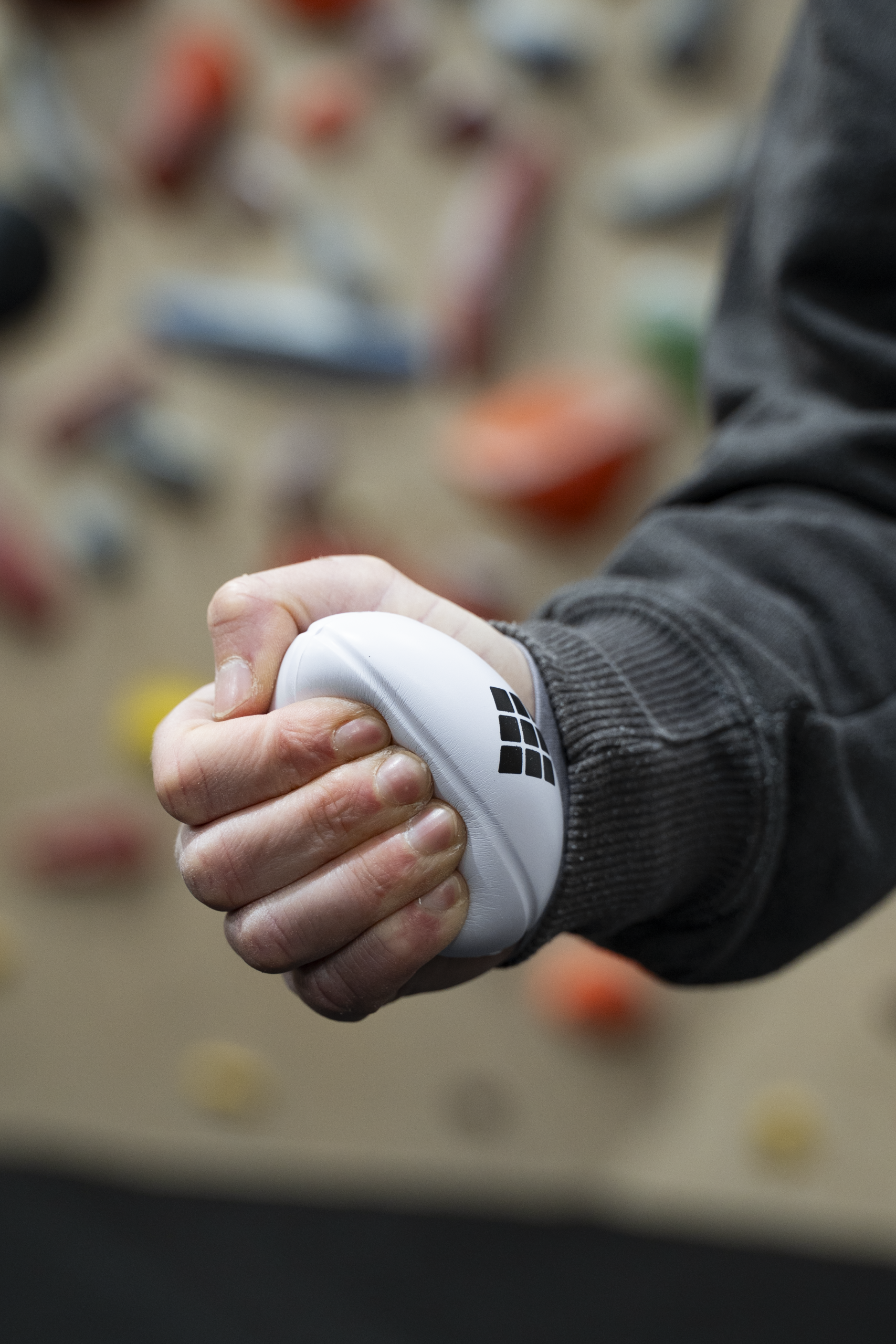
CARCing is the same idea taken off the wall. It started as "car ARCing" — using a grip trainer or stress ball for long periods while driving. The name started as a bit of a joke but seems to have stuck, despite most people doing this on the sofa, not in the car. Effectively, you are trying to achieve the same thing as ARCing: blood flow to the forearms for long periods of time.
What it does to your forearms
Let's start with the problem it's solving. Your forearm flexors are often the failing point in climbing. They are small(ish) muscles which are required to produce a lot of force, and for extended periods of time. If the time is shorter (i.e. bouldering), the forces are often higher so fatigue still builds up.
The muscles in the forearm will occlude when contracted at anything above 40-50% of maximum effort. Occluding means no blood can get in or out of your arm as the vessels close. Roughly speaking, if you can hang your bodyweight on one arm, your forearms would be able to keep delivering blood continuously if you hung on two arms with some assistance. This shows why getting stronger can make you feel fitter. But getting stronger does not help the structures within your muscle move blood more efficiently.
Here is an analogy to help you imagine what is going on.
Think of the forearm as a big city (e.g. London). The arteries and veins are like the motorways bringing things to and from the city, (like the M25, M1, M4 etc): they deliver blood into the muscle quickly and in bulk. The capillaries are the smaller streets where the actual work happens: oxygen (fuel) is dropped off at the fibres and waste (metabolites) is picked up. When people talk about training their cardiovascular system, they are generally speaking about making the major roads bigger, which is useful, but it doesn't help the smaller roads of the city function any better. A fit person with an untrained forearm has a perfectly good motorway system, but when you get into the neighborhoods there is a lot of traffic as there are fewer smaller roads. Traffic pours in and then crawls. That's why climbing specific fitness training is so important, it is localised to the muscle. If you contract hard and occlude the muscle, that's all the red lights on; no traffic is moving. No fuel is being delivered and no waste is being removed. This means its even more important that the blood (traffic) can move as efficiently as possible when the lights are green (your not pulling on a hold).
Endurance training like ARCing aims to make the city work more efficiently by building more streets, making better use of the fuel delivered and getting better at removing waste.
Here's what that looks like at the tissue level, roughly in order of confidence. This is the slightly geeky bit you can skip if you don't want to know the details.
Capillaries. Sustained low-force contraction means sustained blood flow, and blood flow means shear stress on the vessel walls. That, alongside local hypoxia, triggers the muscle to grow new capillaries around the fibres. More capillaries means shorter diffusion distances for oxygen in, and for lactate and hydrogen ions out.
Mitochondria. More of them, and more of the enzymes that run them. This is what lets the muscle regenerate ATP aerobically instead of leaning on glycolysis, and it's the machinery that rebuilds phosphocreatine between hard moves. Faster PCr resynthesis is super important for improving power endurance, both in bouldering and route climbing, and for recovering between hard sequences.
Waste handling. Better transport of lactate out of the fibre and better clearance of acid. This isn't buffering — that's a high-intensity adaptation — it's removal.
A couple of caveats before I start getting hate mail (still geeky). Almost all the direct biopsy evidence for these adaptations is from leg muscle in cyclists and runners. In climbers we have proxies: Fryer et al. (2012) used near-infrared spectroscopy to show that better climbers reoxygenate their forearms faster after contraction, and that recovery rate tracks grade better than strength does. That's the functional signature of the adaptations above, not a direct measurement of them. The Lattice team took part in one of Simon's studies which showed this and it was great to see that the ''fitter'' climbers on the team did outperform the less fit among us for oxygen re-profusion within a 3 second repeater rest.
And a recent meta-regression (Mølmen et al., 2025) across 50 years of biopsy studies complicates the neat "low intensity for capillaries" story. Pooling nearly 6,000 participants, it found capillary gains happen fast, mostly inside the first four weeks, then plateau, and were only seen in untrained and moderately trained people. Intensity didn't much change how many capillaries grew. Mitochondrial gains kept increasing with more sessions and more weeks, and higher intensity built them faster per hour. This means that high intensity training could be better than low intensity, but what really matters is time under tension, equivalent to weekly climbing volume.
So if you're an experienced climber with years of volume behind you, a long ARC block probably isn't building many new roads. What it's still doing is maintaining the ones you have, adding mitochondria, and buying you time on the wall to use your muscles more efficiently. That's a real benefit, just a more modest one.
Why I use both options in training plans
If capillarisation could be limited and higher intensity climbing builds mitochondria faster per hour, why not just do hard climbing sessions? Three reasons, and none of them are physiological.
ARCing can be done at higher volumes without compromising recovery. Hard bouldering, fingerboarding and power endurance all draw on the same budget: connective tissue tolerance, nervous system freshness, skin. ARCing draws on this far less. CARCing goes one further as you can do this at home, which means less time at the gym. You can do low intensity training like this and be no worse off for the next session. Most climbers aren't limited by how much intense work they can plan; they're limited by how much they can absorb.
It stays below the occlusion threshold. The intervals that build mitochondria efficiently in a quad are run at intensities where blood is still flowing. In the forearm, anything above about half your max grip closes the roads. So the forearm version of "moderate intensity" is much lower than most people think, and the window between "too easy" and "occluded" is narrow. ARC/CARCing has to be super easy on purpose. I have seen so many climbers doing 'low intensity' training but pulling harder than they should.
The interference effect is something to consider. If you have 3 sessions per week and want to increase strength and fitness, it's hard not to combine the workouts. Combining two differing stimuli can cause an interference effect, which means gains from one workout compromise gains from the other. ARCing is so low intensity that it can act as a warm-up and cool-down for strength sessions, reducing the negative effect compared to higher intensity endurance workouts. CARCing can be done away from strength sessions, which means you get the best of both worlds.
Further arguments for both ARCing and CARCing.
ARCing teaches technique and how to not overgrip. Spending so much time on the wall is good for many climbers as it helps movement patterns and helps climbers relax. This is certainly more applicable to route climbers, but can still help boulderers.
CARCing is more localised and easier to do. The meta-regression above showed that small-muscle-mass training — one leg, one arm — produces the same mitochondrial gains in the muscle worked as whole-body exercise. The adaptation is local, and it accumulates with sessions. Frequency was one of the strongest predictors of mitochondrial adaptation in that dataset: six sessions beat four beat two. CARCing can most likely be done more frequently than any other training if you're psyched enough.
So the honest position is this. ARC/CARCing isn't magic, and it's not the most efficient route to any single adaptation. It's the most efficient route to more forearm training without overloading your body, and for most climbers that's the constraint that actually matters.
Examples of how it has been used in athlete's training
Jen Wood wanted to focus on gaining more fitness over the winter months of 25/26. She committed to doing 6 hours per week of ARCing and CARCing on top of other training to improve her endurance for a specific route goal. This meant whole sessions of ARCing or doing a lot around other strength workouts. She improved her endurance significantly and has just had the best season of her life, including sending 9a.
Erin McNeice has always done more than she has been asked to. As she spends so much time travelling to and from climbing walls both nationally and internationally, there is a lot of downtime. Enter CARCing. Doing around 1-2 hours of CARCing per week during her days off or travel time is a great way to reduce the need for more time at the gym and allows climbing technique to be focused on hard movements. We saw a massive improvement in her endurance over the past few years leading to the overall gold medal in the 2025 Lead World Cup season.
James Pearson is a man who does not enjoy endurance training or routes where you cannot hide from the pump. As an exceptionally powerful athlete, endurance does not come naturally to him. Focused periods of this training have made a big impact on his ability to recover on route and have more time to think during those pumpy sections. He is currently using this (and seeing good improvements) as he tries to send a local 9a trad project in France. His goal has been to do 3 hours total per week on top of other climbing.
How you can use ARCing or CARCing this winter
If you're a route climber looking to improve your climbing fitness, try and do ARCing after other endurance workouts to get more endurance training in. Even twice a week can add up to a lot more volume on your arms. This means, if you're climbing on routes or doing any circuits, do 5-10 minutes of ARCing at the beginning of your warm-up and 10-40 minutes after you're done. Obviously this is very time dependent. If you are training the next day, keep the time on the wall shorter to reduce fatigue. On top of this, CARCing on rest days or in the morning before training is also an amazing option. See if you can add in 1 hour per week on top of training.
If bouldering is your focus, I would try CARCing mostly. You can use ARCing to warm up or as an addition on the less frequent fitness training days, but honestly this requires better planning to not rock the strength boat. CARCing sessions can be done on rest days, or as far away from climbing sessions as possible on the same day.
Personally, I tend to avoid ARCing or CARCing close to peak performances as this is a much better protocol for base training. This is because I often want my forearms to be feeling stronger close to peak performances, and this low intensity training can teach your muscles to be more efficient neuro-muscularly. So if you are currently in peak season (trying to send your project), don't add this in just yet.
And most importantly, if your working with a coach - talk to them first before making any changes to your training!
Thanks for reading,
Ollie Torr
Comments (0)
Be the first to leave a comment.