What mental fatigue does to your climbing, why it hits every climber differently and how to train around it
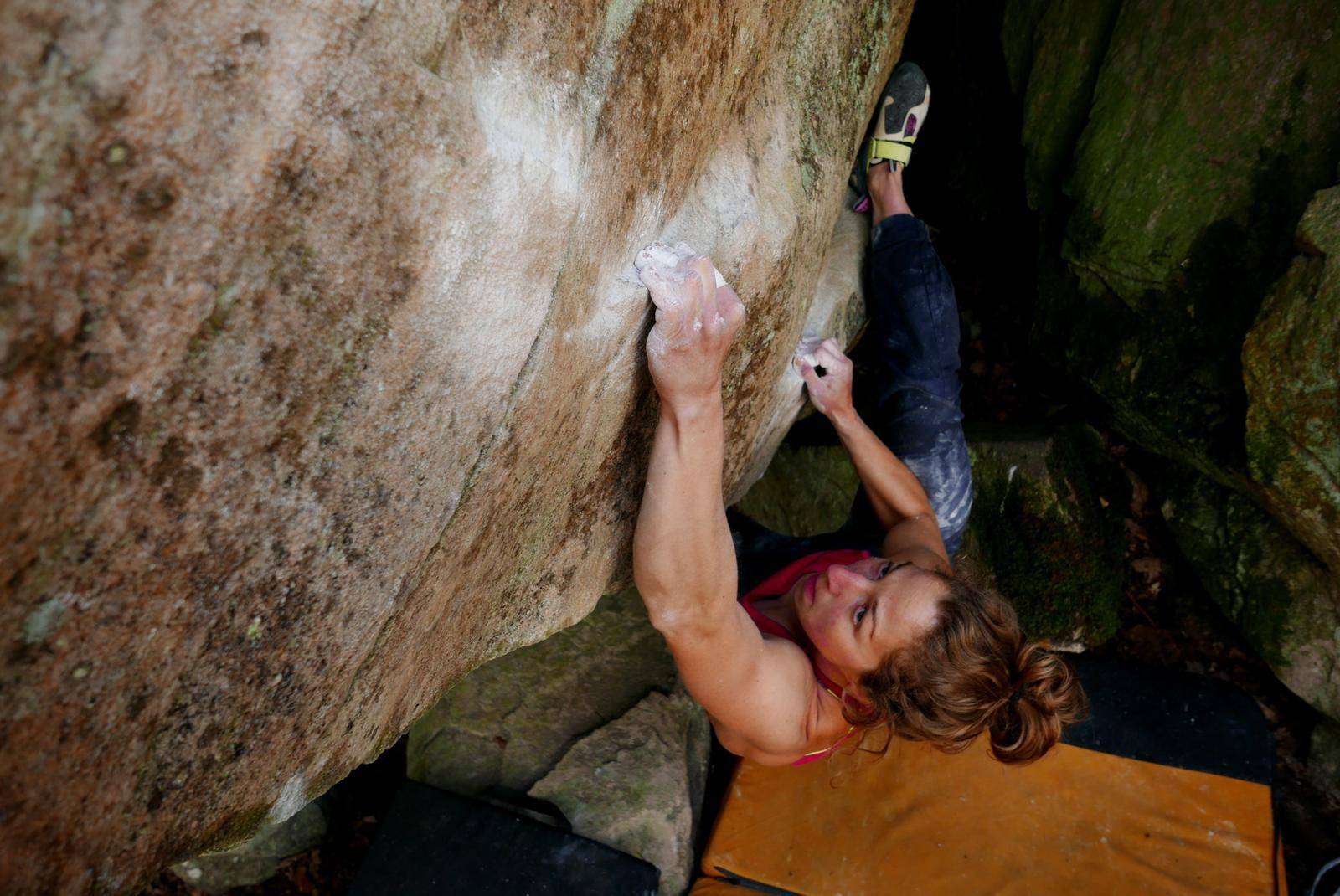
Let me describe an event that might resonate with you.
You try the same climb, one week apart. You train on the same day of the week at the same time but have two very different sessions.
Last Thursday, you were floating, one of those rare low-gravity days. Your warm-up felt easy, your body remembered the positions on your project and you tried hard without having to think about it. Days like this are when you think your training is on point and things are coming together. You left feeling psyched and ready to start applying these gains to harder climbs.
This Thursday, same gym, same warm-up, same project, and you feel terrible. You try to compensate with more caffeine, more sugary snacks and more effort. Better tactics and focus don’t seem to be moving the needle on how well you’re climbing. You can’t seem to remember how to hit the moves right, and when you do, they just feel so much harder. Your body doesn’t seem to be coordinating properly to create the right momentum or tension. You start to think you must have put on body weight or just become weaker. If you’re on a rope, this is when you feel fear creeping in.
You probably know that feeling when a session is going badly and you can’t put your finger on how things have got so much worse so quickly.
A common sign I see when someone is experiencing this is a climber grabbing their phone between attempts. When someone is feeling good, they tend to be engrossed in the climbing and thinking about what would be better on the next go. If they’re struggling, Instagram offers a momentary reprieve, and before long they’re opening work emails between attempts. I have been guilty of this.
Physically, you don’t change much from one week to the next unless you’ve seriously overdone it. Mentally, things can change massively in that timeframe. Mental fatigue can show up in how you feel, in how you perform, or both (Van Cutsem et al., 2017). But each of those moments on the second Thursday has an explanation.
Why the second Thursday feels different
You can’t remember the moves or body positions because route reading is a planning task, and planning is one of the first things mental fatigue affects. After two hours of demanding mental work, people took longer to plan their way through a puzzle, while their performance on a simple memory task held up (van der Linden et al., 2003). Your memory is fine. It’s the planning that’s taken the hit.
The moves you did with ease last week feel way harder because effort feels harder. When people cycled to exhaustion after 90 minutes of a demanding mental task, they gave up about 15% sooner than after 90 minutes of a documentary, with no difference in heart rate or lactate (Marcora et al., 2009). Your forearms are doing the same work. It just feels like more, especially on endurance and power endurance.
Your body won’t coordinate and hit positions correctly. This is the one I see most in the climbers I coach who have stressful jobs. In football and other skill sports, technical skills like passing accuracy get worse when players are mentally fatigued (Habay et al., 2021). In climbing, we find our technique, tension and co-ordination suffer in the same way.
The fall that feels bigger this week and the frustration about having a bad session are because keeping fear and frustration in check takes effort. After difficult cognitive tasks, people reacted to unpleasant images just as strongly as after easy ones, but they could only turn that reaction down after the easy tasks (Grillon et al., 2015). The fear probably arrives at the same strength as last week. Talking yourself through it is what’s harder, whether that’s above a poor piece of gear or committing to a comp-style dyno at the top of the wall. It’s the same with frustration and not letting the bad session get to you.
And lastly, your psyche may have dropped because mental fatigue is partly your brain re-weighing whether effort is worth it (Müller & Apps, 2019). After a long week, a hard go on your project looks more expensive than it did last Thursday, and thirty minutes in, calling the session starts to look like the better deal.
What changed between the two Thursdays comes down to two terms
The first is mental load. It is what your week asks of you, from emails, to decision-making, to problem solving at work. It is defined as the cognitive demands a task imposes relative to the resources available to meet them (Hart & Staveland, 1988; Díaz-García et al., 2022). This means that the same meetings or deadlines in a week can carry a heavier load if there is less in reserve. If you travel for work, your reserves get reduced by the travel and by the work itself.
The second term is mental fatigue. This is the impact the load has had on you, the foggy head or the general drop in psyche. It is a psychobiological state arising from prolonged periods of cognitive activity or high cognitive demands, resulting from both acute and cumulative processes (Lopes et al., 2023). That’s why a tough day doesn’t arrive on its own. It stacks on top of whatever the last few weeks have already left you with.
The two interact through effort. Cognitive effort is the resources you invest in meeting a task’s demands, and it sits between load and fatigue, so the same load can leave people with different levels of fatigue depending on how much effort they put in (Müller & Apps, 2019; Lorcery et al., 2024). A day you dragged yourself through can turn the same load into a lot more fatigue.
This also helps to explain why mental fatigue shifts week to week. It is a complex interaction of how long you’ve been under load, how much psyche you have for the task and the physical demands placed on your body. Hard physical training can add to it too (Meeusen et al., 2021), so a big training week can leave you mentally exhausted even if work is quiet.
This is exactly what Cam’s PhD has been working on, trying to understand how we can measure these complex interactions to quantify an athlete’s perception of their mental fatigue.
How to adapt your training
What does a plan with room for the second Thursday look like in practice? It starts with noticing which Thursday you’re having. Across two seasons of elite netball, players’ ratings of mental fatigue fluctuated throughout the season, and they behaved differently from their ratings of physical fatigue, tiredness, stress, mood and motivation (Russell et al., 2022). Recording a quick note before each session, how mentally drained you feel and what kind of day you’ve had, helps you see what a high mental load day looks like.
Then match the session to your head. A review of the research found mental fatigue reduced endurance performance, while maximal strength and power were unaffected (Van Cutsem et al., 2017). On a second-Thursday kind of day, move the session if you can. If you can’t, go for the minimal effective dose. A few max hangs or limit moves with full rest hold up well, and power endurance, long route sessions and benchmarks are better saved for a fresher day.
When the second Thursday turns into every Thursday, drop to the minimum you’re comfortable with and build back up. In one study, people who started a training programme with lots of stressors and few psychological resources improved their fitness least (Ruuska et al., 2012). Consistency can mean fewer, shorter sessions for a while, as long as the stimulus stays. After four weeks of endurance training, previously untrained adults tolerated mental exertion better before a cycling time trial than a placebo group did (Filipas et al., 2020). Protecting your consistency in the heavy weeks may be what makes the next heavy week slightly easier.
Bad day or bad month?
There’s one thing none of this advice can tell you yet, which is whether the mental fatigue you’re carrying is from today or from the last few weeks. Elite athletes and staff describe mental fatigue developing within a single day and building up across weeks (Russell et al., 2019). Those two need handling differently, and right now telling them apart is guesswork.
Cam has spent the last few years of his PhD working on how to measure exactly this. In his review of the research (currently under peer review), the most common measure of mental fatigue was a single line running from “not at all” to “completely”, and the validated questionnaires that do exist were developed in clinical populations rather than athletes.
One number can’t tell a bad Thursday from a bad month.
Researchers who tracked elite netballers over two seasons made the case for including mental fatigue in athletes’ regular self-report measures because it behaved differently from physical fatigue, stress, mood, and motivation (Russell et al., 2022). Doing that properly needs a measure built for athletes. That’s what Cam is building now for Lattice and for all athletes.
Two short questionnaires. One for how you feel today and one for the last few weeks.
Here's how you can help
Cam would really value your help. His survey takes about 10 minutes online and is open to anyone 18+ who trains 3 times a week, or roughly 3 hours a week, in any sport. It’s part of his PhD at the University of Derby and has ethical approval from the university.
If you’ve done one of his surveys before, thank you, and please share it with your training partners instead. We will continue to share what we find as the research develops.
Thanks for reading,
Ollie Torr
References
Díaz-García, J., González-Ponce, I., Ponce-Bordón, J., López-Gajardo, M., Ramírez-Bravo, I., Rubio-Morales, A., & García-Calvo, T. (2022). Mental load and fatigue assessment instruments: A systematic review. International Journal of Environmental Research and Public Health, 19(1), Article 419. https://doi.org/10.3390/ijerph19010419
Filipas, L., Martin, K., Northey, J. M., La Torre, A., Keegan, R., & Rattray, B. (2020). A 4-week endurance training program improves tolerance to mental exertion in untrained individuals. Journal of Science and Medicine in Sport, 23(12), 1215–1219. https://doi.org/10.1016/j.jsams.2020.04.020
Grillon, C., Quispe-Escudero, D., Mathur, A., & Ernst, M. (2015). Mental fatigue impairs emotion regulation. Emotion, 15(3), 383–389. https://doi.org/10.1037/emo0000058
Habay, J., Van Cutsem, J., Verschueren, J., De Bock, S., Proost, M., De Wachter, J., Tassignon, B., Meeusen, R., & Roelands, B. (2021). Mental fatigue and sport-specific psychomotor performance: A systematic review. Sports Medicine, 51(7), 1527–1548. https://doi.org/10.1007/s40279-021-01429-6
Hart, S. G., & Staveland, L. E. (1988). Development of NASA-TLX (Task Load Index): Results of empirical and theoretical research. In P. A. Hancock & N. Meshkati (Eds.), Human mental workload (pp. 139–183). North-Holland. https://doi.org/10.1016/S0166-4115(08)62386-9
Lopes, T. R., Fortes, L. S., Smith, M. R., Roelands, B., & Marcora, S. M. (2023). Editorial: Mental fatigue and sport: From the lab to the field. Frontiers in Sports and Active Living, 5, Article 1213019. https://doi.org/10.3389/fspor.2023.1213019
Lorcery, A., André, N., Benraïss, A., Pingault, M., Mirabelli, F., & Audiffren, M. (2024). Engagement of mental effort in response to mental fatigue: A psychophysiological analysis. Psychology of Sport and Exercise, 74, Article 102660. https://doi.org/10.1016/j.psychsport.2024.102660
Marcora, S. M., Staiano, W., & Manning, V. (2009). Mental fatigue impairs physical performance in humans. Journal of Applied Physiology, 106(3), 857–864. https://doi.org/10.1152/japplphysiol.91324.2008
Martin, K., Staiano, W., Menaspà, P., Hennessey, T., Marcora, S., Keegan, R., Thompson, K. G., Martin, D., Halson, S., & Rattray, B. (2016). Superior inhibitory control and resistance to mental fatigue in professional road cyclists. PLoS ONE, 11(7), Article e0159907. https://doi.org/10.1371/journal.pone.0159907
Meeusen, R., Van Cutsem, J., & Roelands, B. (2021). Endurance exercise-induced and mental fatigue and the brain. Experimental Physiology, 106(12), 2294–2298. https://doi.org/10.1113/EP088186
Müller, T., & Apps, M. A. J. (2019). Motivational fatigue: A neurocognitive framework for the impact of effortful exertion on subsequent motivation. Neuropsychologia, 123, 141–151. https://doi.org/10.1016/j.neuropsychologia.2018.04.030
Russell, S., Jenkins, D., Rynne, S., Halson, S. L., & Kelly, V. (2019). What is mental fatigue in elite sport? Perceptions from athletes and staff. European Journal of Sport Science, 19(10), 1367–1376. https://doi.org/10.1080/17461391.2019.1618397
Russell, S., Jenkins, D. G., Halson, S. L., Juliff, L. E., Connick, M. J., & Kelly, V. G. (2022). Mental fatigue over 2 elite netball seasons: A case for mental fatigue to be included in athlete self-report measures. International Journal of Sports Physiology and Performance, 17(2), 160–169. https://doi.org/10.1123/ijspp.2021-0028
Ruuska, P. S., Hautala, A. J., Kiviniemi, A. M., Mäkikallio, T. H., & Tulppo, M. P. (2012). Self-rated mental stress and exercise training response in healthy subjects. Frontiers in Physiology, 3, Article 51. https://doi.org/10.3389/fphys.2012.00051
Van Cutsem, J., Marcora, S., De Pauw, K., Bailey, S., Meeusen, R., & Roelands, B. (2017). The effects of mental fatigue on physical performance: A systematic review. Sports Medicine, 47(8), 1569–1588. https://doi.org/10.1007/s40279-016-0672-0
van der Linden, D., Frese, M., & Meijman, T. F. (2003). Mental fatigue and the control of cognitive processes: Effects on perseveration and planning. Acta Psychologica, 113(1), 45–65. https://doi.org/10.1016/S0001-6918(02)00150-6
Comments (0)
Be the first to leave a comment.