6 Weeks Before Your Climbing Trip? This Is What to Train.
I’m lucky enough to have booked a flight to Spain and I’m starting to wind down my training in the lead-up to my trip. If you find yourself in a similar position, but you don’t know where to start with your trip prep… look no further, here’s what to train.
1. Finger strength maintenance
The worst thing you can do before a trip is desperately try and cram in loads of finger strength sessions, as this will increase your risk of getting injured before the trip. Instead, be specific, keep it simple and aim for consistency.
Because lifting edges/pinch blocks specifically target the fingers/forearms with low levels of fatigue for the shoulders, this can be a great alternative to fingerboard hangs. This approach is great when time is short and you’re keen to supplement your climbing training.
Specificity – Think about where you’re going and what the climbing style is like. For example, if you’re heading to Kalymnos, pinch training could be a great idea, whereas if you’re planning to climb on crimpy limestone, a half 4 might be more suitable.
If you’re heading on a route climbing trip, you could try longer 15-second lifts and for a boulder trip, try shorter duration lifts. Keep your trip goals in mind and aim to match the demands of the climbing you plan to do.
80% of max – Don’t overdo it! With a short time-frame, you don’t have the luxury of very gradually and progressively overloading. Instead, aim for consistency, adaptation and consolidation. Aim to work at 80% of your max.
Keep the volume low. 4 – 6 lifts per side is sufficient for a session. Aim to consistently complete one session every week to supplement your climbing training. Don’t do this session when your fingers are tired.
2. Power endurance focus
When climbing, our bodies rely on our different energy systems to sustain an effort. Depending on the nature of the climb, we may rely heavily on one specific energy system or switch between different ones.
When planning training with limited time, you need to target the relevant primary energy system that you’ll likely use during your trip.
Here are two common examples:
TRIP 1: Boulder
AIMS: onsighting/quick redpointing lots of boulders
PRIMARY ENERGY SYSTEM: Anaerobic Capacity
FURTHER INO: Also known as short-end power endurance, we primarily rely on this energy system for shorter, high-intensity climbing attempts lasting roughly 30 seconds to 2 minutes.
TRIP 2: Sport
AIMS: onsighting/quick redpointing lots of routes
PRIMARY ENERGY SYSTEM: Aerobic Power
FURTHER INO: Also known as long-end power endurance, we primarily rely on this energy system for longer, more sustained sections of high-intensity climbing lasting roughly 2-5 minutes.
Remember, when climbing, it’s often necessary to switch between different energy systems during an attempt. For example, if you were resting on an easier, juggier section of a sport climb, you’d rely more on your aerobic capacity. If energy systems are something you’re keen to learn more about, dive deeper here or check out our ‘A Climber’s Guide to Training’ course.
3. Weekly structure example
The following are simple ideas of a weekly structure for a base training week. One example is to prepare somebody for a boulder trip and the other is for a sport trip. There are many, many things to consider when writing a plan and these examples just cover the basics.
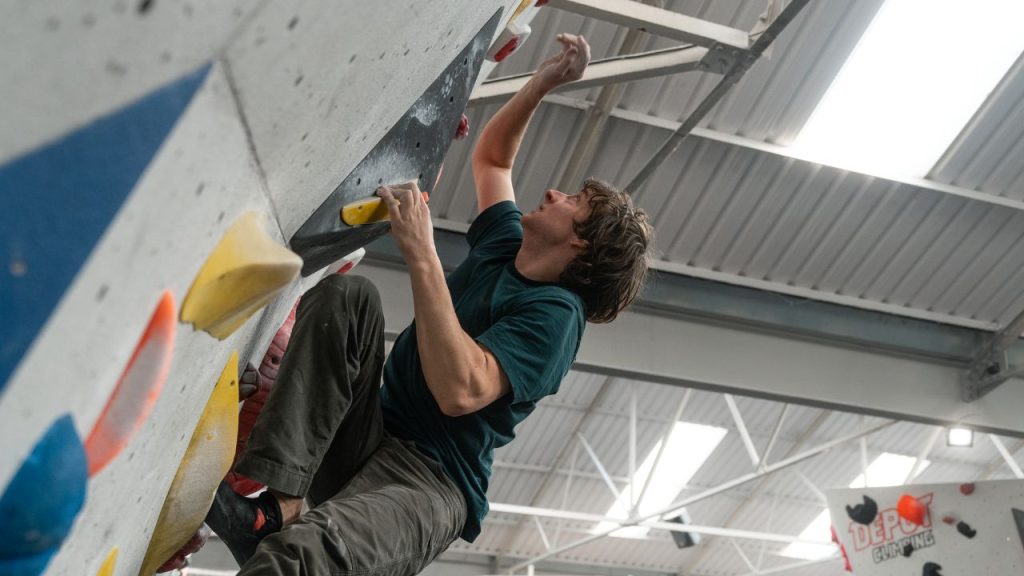
Boulder – Base Week
M – Lower body Flex
T – Boulder Triples
W – Rest
T – RPE – No Hang – 7s, Projecting – Working Hard Moves, Low Row, Shoulder Press
F – Rest
S – Banded Shoulder Rotations – Open Climb
S – Optional, Short Open Climb OR Rest
Each week, there is:
x1 anaerobic capacity session – This is listed after a day of rest from climbing due to the associated fatigue.
x1 strength/power boulder and supplementary S&C session – included to help prepare for the physical difficulty of individual moves. This is listed after a rest day from climbing, but closer to the Open Climbing session to leave the climber feeling strong/recruited. The S&C targets finger strength, pull strength and includes an antagonist exercise.
Open climbing – included to help ensure that the training remains fun! There is one full session and an optional ½ second session, the load (intensity/volume) of which would be modified based on recovery.
x1 lower body flexibility session
x1 shoulder rotations session that could be incorporated into a warm-up.
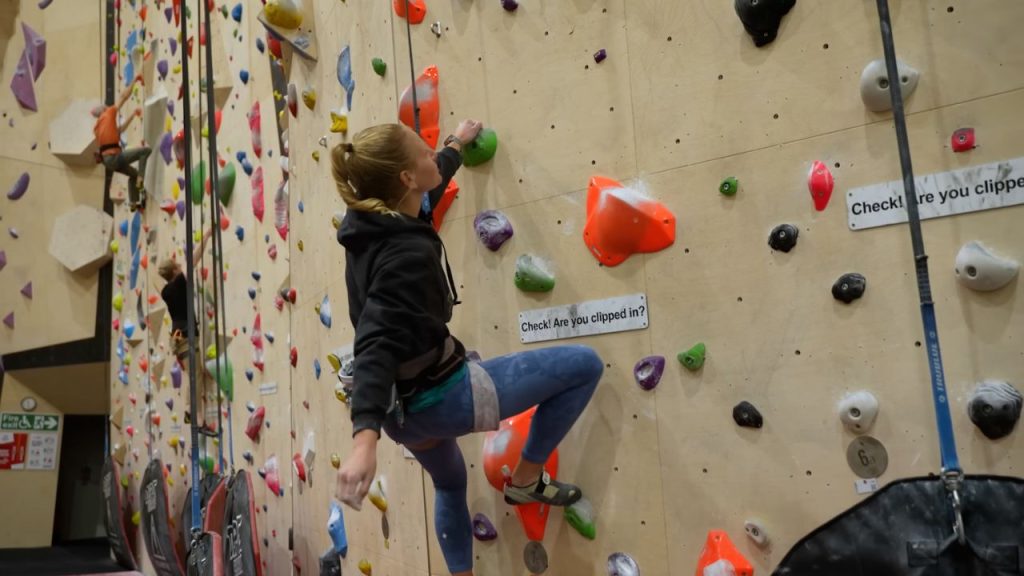
Sport – Base Week
M – Lower body Flex
T – Route Pyramid
W – Rest
T – RPE – No Hang – 15s, ½ Boulder Max Efforts + ½ 1 On 1 Off, Low Row, Shoulder Press
F – Rest
S – Banded Shoulder Rotations – Open Climb
S – Optional, Short Open Climb OR Rest
Each week, there is:
x1 aerobic power session – This is listed after a day of rest from climbing due to the associated fatigue.
x0.5 strength/power boulder + x0.5 aerobic base session – included to both help prepare for the physical difficulty of individual moves and to optimise recovery at rests/between attempts. This is listed after a rest day from climbing, but closer to the Open Climbing session to leave the climber feeling strong/recruited.
x1 supplementary S&C session – included to help prepare for the physical difficulty of individual moves. Targets finger strength, pull strength and includes an antagonist exercise. This short session can be completed after the strength/power session.
Open climbing – included to help ensure that the training remains fun! There is one full session and an optional ½ second session, the load (intensity/volume) of which would be modified based on recovery.
x1 lower body flexibility session
x1 shoulder rotations session that could be incorporated into a warm-up.
As well as planning the base training weeks, it’s also essential to plan in your deload weeks. During these weeks, plan for a 40-60% reduction in overall training load to facilitate adaptation and recovery.
Here is an example of how you might plan your 6 training weeks.
Week 1: Base
Week 2: Base
Week 3: Deload
Week 4: Base
Week 5: Base/Taper
Week 6: Deload
Now that you have a framework for training, you can get stuck into planning in the lead-up to your trip.
Happy training!
Want all of your training, pre-planned with sessions and tracking all in one place? Why not try a LatticePlan? Take the quiz now and try it free for 7 days to see if you want to continue, learn more here.