Climbing and Running: How to Balance Your Training
Are you a hybrid climber who enjoys both climbing and running? You’re not alone! Many climbers find that running greatly benefits their mental health and try to run at least once a week. But what should climbers think about when adding running into their base training phase?
While running won’t make you stronger on an 8mm crimp, it can be a powerful supplementary exercise for climbing, if managed correctly.
The Benefits
- Injury Recovery: If you’re sidelined, high-intensity intervals can boost growth hormone levels, potentially speeding up tissue repair.
- Crag Endurance: Better cardiovascular fitness, meaning you aren’t exhausted by the time you reach the base of the route.
- Low-Risk Capacity: Increase your overall work capacity (the ability to handle more training) without putting extra strain on your fingers or elbows.
- Body Composition: A potential tool for optimising body composition.
The Drawbacks
- Recovery Debt: Running is high-impact. If you’re overdoing the miles, your central nervous system might be too fried to give 100% during your climbing sessions.
- The Strength Plateau: High running volume is notorious for blunting explosive power and finger strength gains.
- Range of Motion: Running can lead to muscle tightness. If you run, you must be diligent with your flex work.
Tips for Integration
- The “Slow & Low” Approach: If you’re new, use the run-walk method (e.g., 2 mins on, 2 mins off). The goal is to supplement your climbing, not replace it. Over time, you can decrease/remove the rests, and then increase the overall mileage.
- Order of Operations: Always prioritise climbing. Avoid running immediately before a session or the day before a hard climbing day. Keep your heart rate under 150 bpm (Zone 2) to ensure you aren’t digging a recovery hole.
- Data is Your Friend: Use a sports watch to track Heart Rate Variability (HRV) and Resting Heart Rate. If your HRV drops or your RHR spikes, it’s a sign that the running is eating into your climbing recovery. Occasional spikes and drops are okay, but if it’s a trend, dial back the running.
- Injured? Try incorporating some high-intensity intervals for an HGH boost.
- Stretch frequently. Focus on calves, glutes, hamstrings and hip flexors.
4 Essential Stretches for Your Climb-Run Base Phase
To support climb-run training, stick to passive, static stretching. As with finger strength training, the overall load to your lower body muscles needs to be accounted for. Because you’re adding load with running, keep the load low with the stretching.
Complete 3 sets (per side) for 30 seconds.
1 minute inter-set rest.
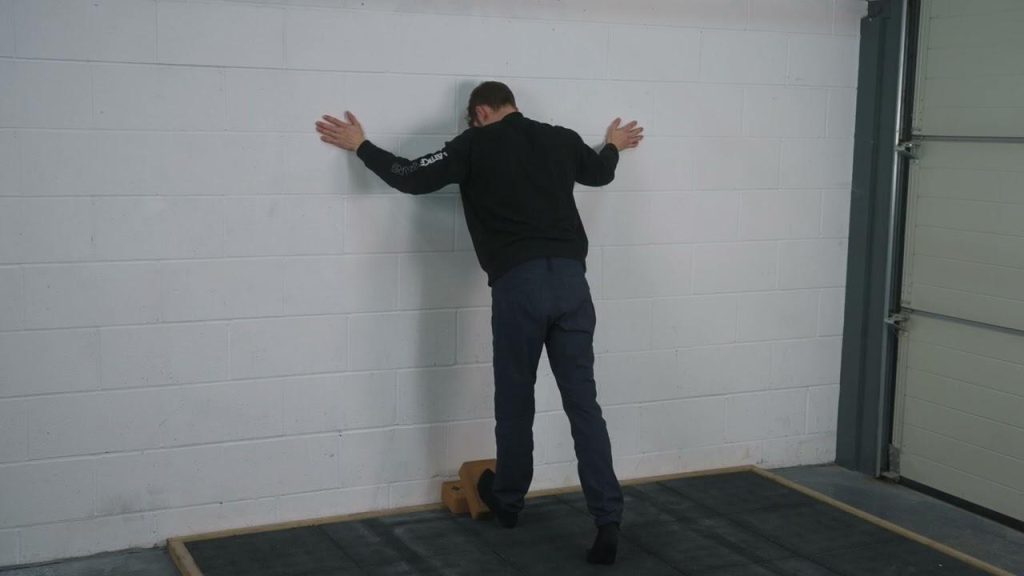
- Calves – Wall Calf Stretch
From a split stance, place the ball of your front foot on blocks or a similar support so it’s raised above your heel. Bring your hips forward while keeping your front knee straight and your heel on the floor to feel a stretch in the calf of the front leg.
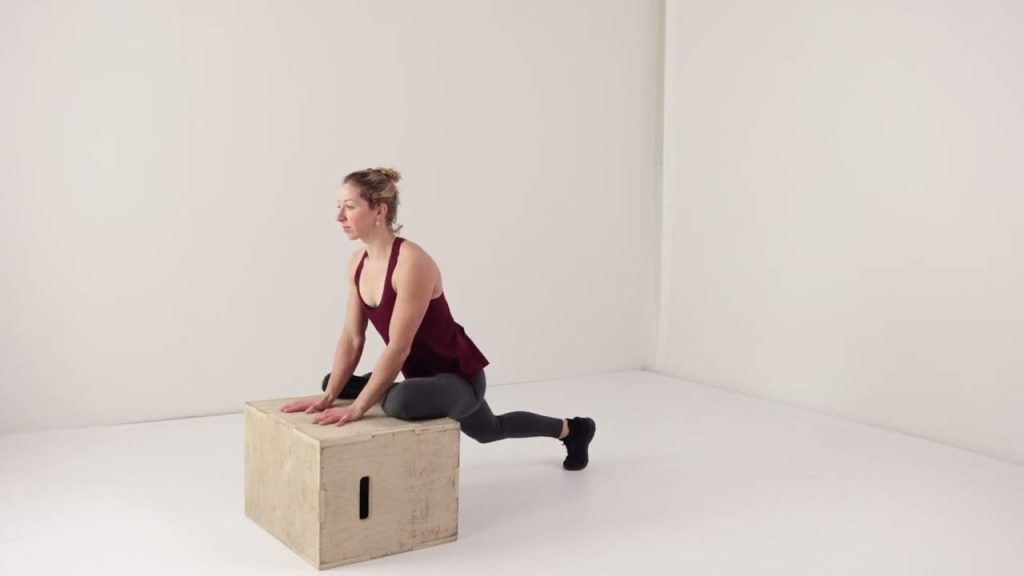
- Glutes – Elevated Pigeon
Place one foot in front of you, elevated on a raised surface with the opposite leg extended behind. Leaning forward deepens the stretch in the hip and glutes.
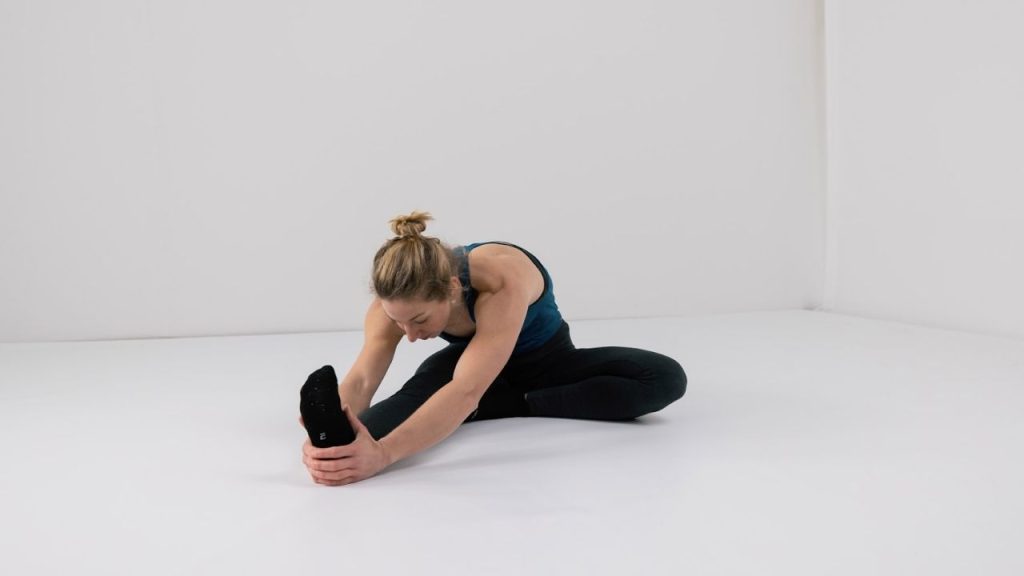
- Hamstrings – Seated Hamstring Stretch
Sit on the floor with one leg extended and the other tucked in. Reach toward the foot of the straight leg, leading with your chest, and use your hand or a band to hold the stretch.
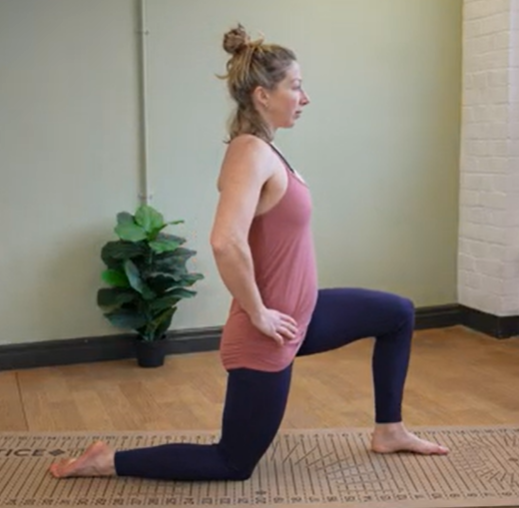
- Hip flexors – Half Long Lunge
Kneel with one leg in front of you at 90 degrees and one behind you at 90 degrees. Engage your abs and the glutes of the back leg to prevent back-arching. As you become more confident, work with the back leg further out behind you.
The Bottom line: Although running is unlikely to improve our climbing, it is possible to balance climbing and running during a base phase if you prioritise effectively. Very careful consideration must be paid to the overall training load (especially for the legs) to optimise your climbing training.
Struggling with the run-climb logistics? Keen to get the most out of your training, but without sacrificing running? Work 1:1 with one of our coaches to take the stress out of finding balance with your training. Find out more about our training plans here.
Comments 1